Last night, while re-reading Nassim Nicholas Taleb’s Antifragile, and correlating it with Convex Optimization Problems I had a strange moment of intellectual whiplash.
His idea that some systems don’t just survive volatility but actually get better because of it. And right there, in between loss functions and gradient descent, I stumbled on a single word that connects both worlds: convexity.
Calculus in Our Algorithms and in Our Lives
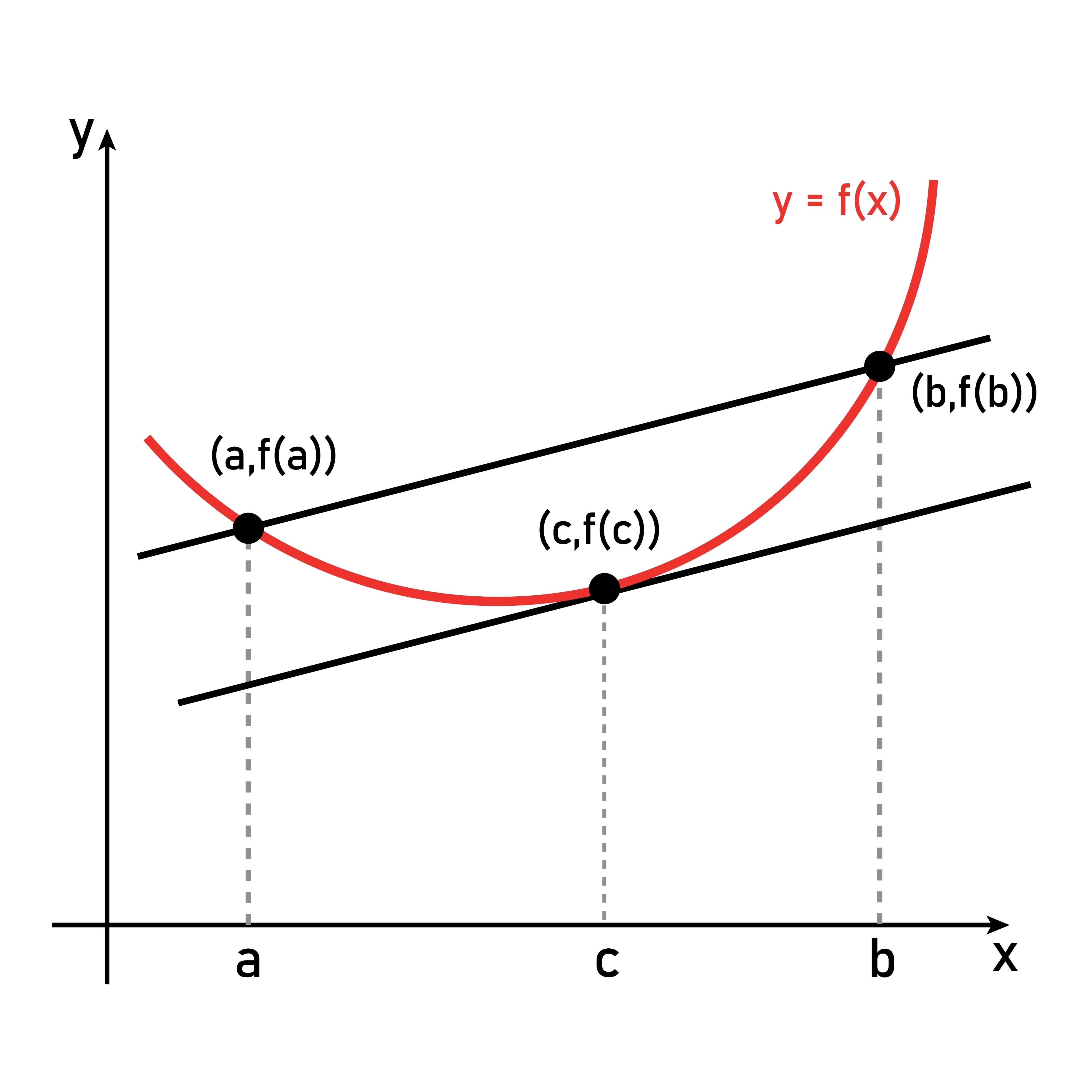
That beautiful U-shaped curve we love in ML, the convex loss function, is our guarantee of stability.
It tells us:
Small deviations don’t hurt much.
Moving in the right direction pays off disproportionately.
Mathematically elegant. Emotionally… familiar?
Because Taleb’s “convex life” is built on the same logic.
When randomness hits you, the average outcome should improve. You either don’t lose much, or you gain a lot.
The Fragile vs. The Convex Life
The Fragile, Concave Life: smooth, predictable, but one big shock can wipe years of progress.
The Antifragile, Convex Life: messy, volatile, but every small stress adds strength.
You take asymmetric risks, the kind that can quietly fail but might change everything if they succeed.
Applying Convex Optimization to Everyday Life
Career: Most jobs can be linear. The side project is convex. Worst case, you learn. Best case, you take off disproportionately.
Learning: Each concept compounds. Calculus didn’t just help me pass exams, it gave me a framework for life & a framework to take asymmetric bets in investing & in life.
Relationships: Smooth ones can be fragile. Convex ones embrace honest stress, emerging stronger after each conflict.
Convexity, it turns out, isn’t just a mathematical property. It’s a way of structuring your existence.
Convex optimization makes algorithms stable.
Convex living makes humans antifragile.
And maybe, just maybe, that’s the most practical use of calculus we’ll ever find outside a classroom.